
Key takeaways
- Social media uploaders use hacks on TikTok to avoid music detection
- Rightsholders aren’t being credited for all uses of their music because uploaders are avoiding music detection
- Pex’s music identification technology and Sound ID reports show rightsholders the most uses of their catalog on TikTok, despite common hacks
Sounds – including music – are a huge part of content creation on TikTok. A viral video being muted for copyright claims is probably something social media influencers have nightmares about. But having the world’s most popular social app be full of music without proper remuneration is definitely something music rightsholders have nightmares about. TikTok’s Media Match tool and commercial music library are the answers to everyone’s woes, but how effective are these solutions at crediting all uses of music on the app? We’ve been investigating and the answer is…not great.
Unclaimed Sound IDs equal lost revenue
We recently tracked 141,000 songs on TikTok and found 2.8 million unique Sound IDs for those recordings. A Sound ID on TikTok is a unique identifier assigned to specific sounds, including songs, snippets, or audio clips. When you claim a Sound ID, you ensure that the sound you created or own is properly credited to you so you are paid royalties. We found 20x as many Sound IDs as recordings. It’s highly unlikely that music rightsholders are aware of all their matching Sound IDs on TikTok, especially since influencers are using some advanced workarounds to avoid having their sounds muted for copyright infringement. Many of these hacks lead to new Sound IDs being generated for music the uploaders don’t own, or only one song being matched to a Sound ID when multiple songs are used in a video.
Every unclaimed Sound ID could mean lost revenue, and TikTok only pays once an ID is claimed, not retroactively. The sooner rightsholders find uses of their music, the more revenue they can protect.
How social media users avoid music detection and infringe on copyrighted music
By now it’s no secret that modified audio with speed and pitch changes is used to avoid copyright claims. Uploaders also use age-old hacks like adding very quiet background music, voice overs, and other sounds to make identifying music difficult. On TikTok, some users make it even more difficult for rightsholders to find their music by uploading copyrighted songs as an “original sound” attributed to the user. If using just a text search and looking for song titles, artists, or lyrics, rightsholders won’t be able to find these “original sounds” using their music.
Dua Lipa deep dive
Let’s look at some examples of Sound ID fraud we found happening with Dua Lipa’s hit song “Houdini.” Users are doing Houdini-like magic tricks with this song and making its royalties disappear.
In all four of these examples, Dua Lipa and the song’s other rightsholders are not being credited or paid.
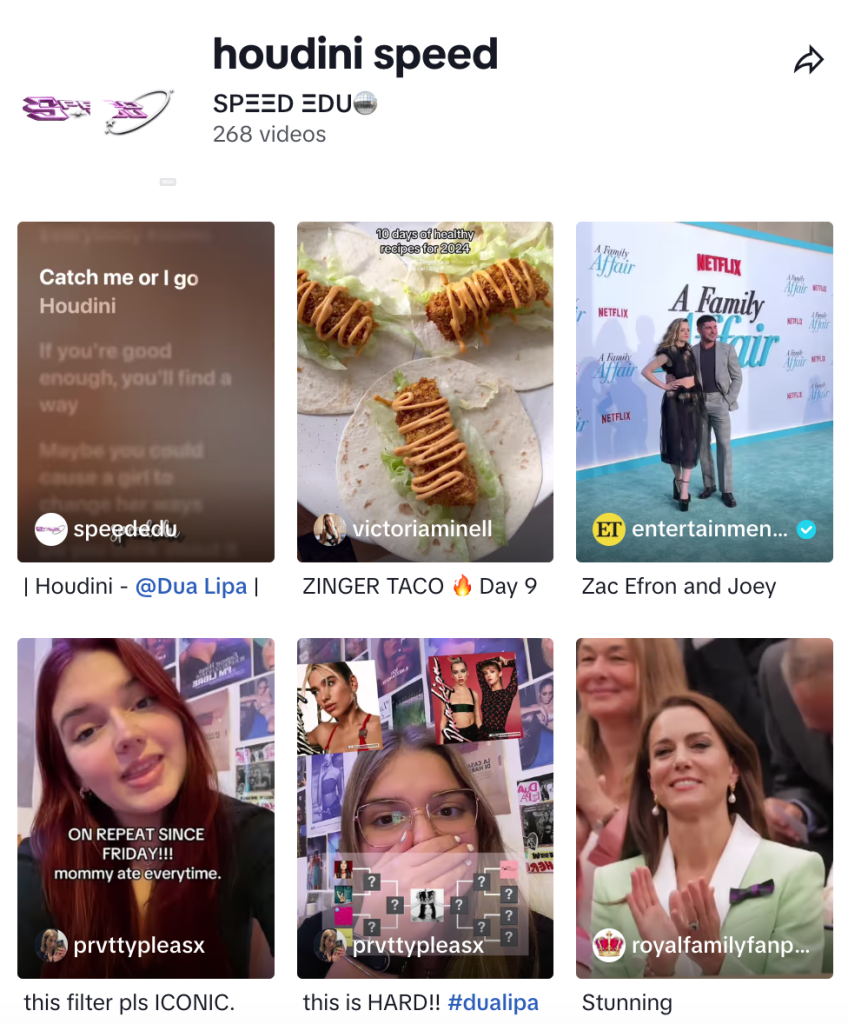
Sped up “Houdini” uploaded as original sound
This manipulated audio version of “Houdini” was uploaded by an account called “SPEED EDU.” There are 268 creations using this specific sound, without crediting it back to Dua Lipa and team. There is even one video from Entertainment Tonight, a major company and brand, using the sound on a video promoting a Netflix movie premiere. Commercial uses like this one are especially valuable for rightsholders to find so they can protect and license their content. Sounds can go viral at any time, so finding and claiming an example like this one quickly ensures that any future success will be credited correctly to the artist and rightsholders.
“Houdini” linked to Sound ID for an undetectable song
This TikTok video uses an unmodified version of “Houdini” but also uses the song “Dance You Outta My Head” by Cat Janice with the volume turned down. In the beginning of the video, you can hear the uploader speaking with the Cat Janice song playing very quietly. Then you hear “Houdini” playing very loudly, but only “Dance You Outta My Head” is linked as the sound on this video. Without audio identification technology, rightsholders wouldn’t be able to find this use.
Users add songs from TikTok’s music library, turn the volume down, and add another popular song to avoid copyright issues or capitalize on a current trend. If “Houdini” wasn’t available in the library, or if “Dance You Outta My Head” was a trending sound, this is exactly what an uploader would do to use the sound they want without being muted for copyright infringement.

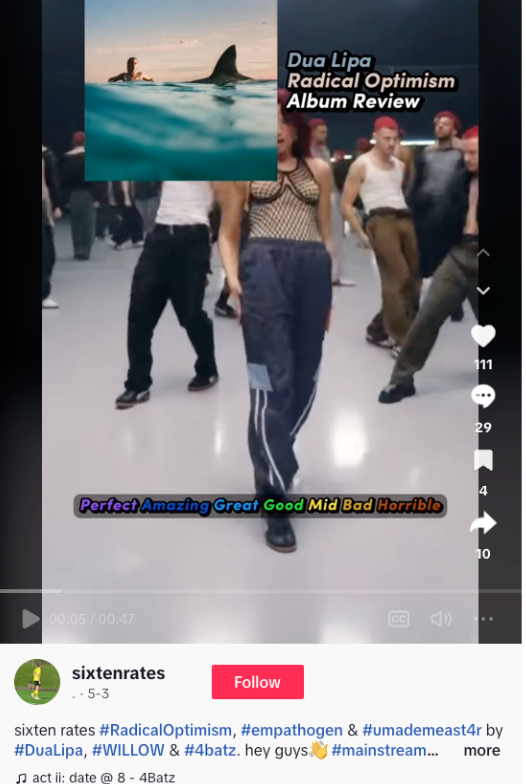
“Houdini” used in compilation that only credits one artist
This TikTok video includes snippets from three different songs, but TikTok videos can only be linked to one sound. In this case, the video contains “Houdini” but links to a sound called “act ii: date @ 8” which is used later in the video (around the 30 second mark). An unmodified version of “Houdini” is being used here, so possibly the audio isn’t identified by TikTok because it’s a short snippet (about 12 seconds). Pex can identify music down to one second of use, so we were still able to find this video.
Sped up “Houdini” with language change in title
This sound uses a sped up version of “Houdini” but was uploaded by an account called PONCHET. The sound title and artist name are both in Thai, so an English language search for Houdini or Dua Lipa would not find this sound. But Pex’s audio identification technology identified the use and matched it to Houdini. This is a prime example of how rightsholders are missing revenue when only using metadata searches, and how TikTok is failing to identify modified audio.

Find and claim more Sound IDs with Pex
We help rightsholders find and monetize uses of their content online, even when social media users try to make it difficult. With Pex technology, rightsholders can find their music on TikTok and get all the information needed,including Sound IDs, to verify attribution or make a claim. Our AI-powered content identification technology analyzes audio and video files and doesn’t rely on metadata.
Reach out to our team to learn how you can get a custom Sound ID report to identify more of your music and claim it on TikTok.
Want more Sound ID news? Sign up for our newsletter.